FSCAC, July 2024: the committee sets four priorities and votes to start with small-business barriers and faster approvals
On July 16, 2024, the Federal Secure Cloud Advisory Committee settled four priorities for its 2024 advice to the General Services Administration and voted to work on barriers to entry and faster approvals first. The priorities are advice topics, not rules.
By FedXchange ·
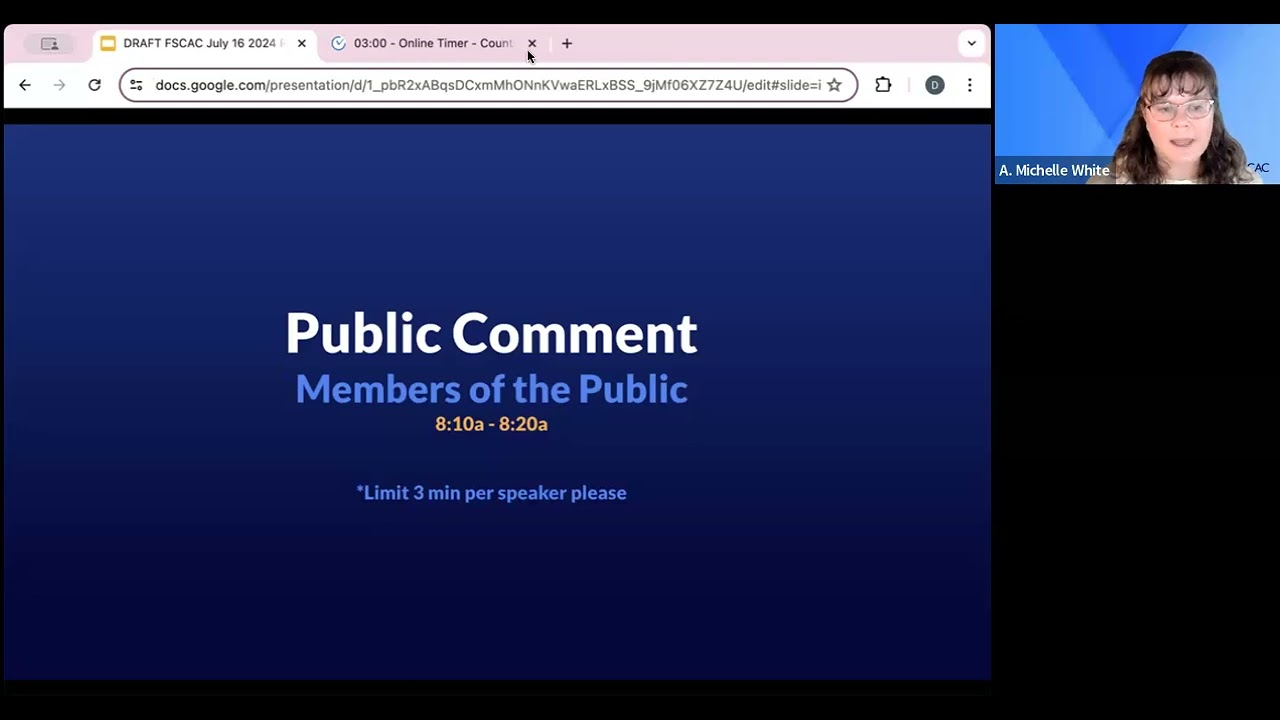 Play the video: Federal Secure Cloud Advisory Committee (FSCAC) July 16 2024 Open Meeting
On July 16, 2024, the Federal Secure Cloud Advisory Committee (FSCAC) held a virtual public meeting. The FSCAC is the advisory committee that the FedRAMP Authorization Act requires. It gives advice to the Administrator of the General Services Administration (GSA), the FedRAMP Board, and agencies. FedRAMP is the Federal Risk and Authorization Management Program. The committee's recommendations are advice. They do not change FedRAMP's rules.
The Federal Register notice said the meeting would hear updates on the Office of Management and Budget (OMB) draft memo on modernizing FedRAMP and from FedRAMP itself. Members would then plan how to deliver their next recommendations to the GSA Administrator.
The meeting came before the FedRAMP Consolidated Rules for 2026. In 2024, the program called its approval a "FedRAMP authorization," and members used that term. The current terms are "FedRAMP Certification" and "FedRAMP Certified," as FedRAMP's What's Changing in 2026 page explains. Quotations in this post are words from the meeting recording, checked against its captions. The post names speakers by their role.
In short:
- What the committee decided. Members settled the wording of four priorities for their 2024 report to the GSA Administrator. They voted to work as a full committee, not in subcommittees. They voted to work on the first two priorities first: barriers to entry, and faster approvals. GSA's minutes record both votes as 14 in favor, with one member absent.
- What the priorities are. Barriers to entry for cloud service providers, with a focus on small businesses. Ways to speed up approval and cut cost. Commercial reciprocity with other security frameworks. What is needed to support adoption of the Open Security Controls Assessment Language (OSCAL). The GSA Administrator added the last two.
- What FedRAMP and OMB said. FedRAMP staff described its new emerging technology framework, an agile delivery pilot, a developer website, and a Technical Advisory Group. OMB said it had finished gathering outside views on its FedRAMP memo and was reaching agreement inside the government.
- What it could mean for agencies and cloud providers. Nothing changed at the time. The priorities set the topics the committee's advice would cover later in 2024.
Sources: the July 16, 2024, meeting video and GSA's agenda and minutes. The priorities are topics for advice to the GSA Administrator, not FedRAMP rules.
Read the steps as text
- Public comment. One speaker, the head of a small business, described the cost and delay small cloud providers face.
- FedRAMP update. Staff described the emerging technology framework, an agile delivery pilot, a developer website, hiring, and a Technical Advisory Group.
- OMB update. OMB said it was reaching agreement inside the government on its FedRAMP memo and gave no publication date.
- Priorities. Members edited the wording of four priorities. The GSA Administrator had added two of them.
- First vote. 14 in favor, per GSA's minutes: work as a full committee, not in subcommittees.
- Second vote. 14 in favor, per GSA's minutes: work on priorities 1 and 2 first.
What did FedRAMP tell the committee?
FedRAMP staff gave a program update.
- Emerging technology framework. FedRAMP released its emerging technology prioritization criteria and guidance in June 2024. A GSA blog post of June 27, 2024 says it starts with generative artificial intelligence (AI), and that qualifying providers could ask for priority review through August 31, 2024. Staff said the framework requires a model card, and that use of agency data to train a model for general product improvement must be opt-in.
- Agile delivery pilot. Providers would assess their own new features as they release them, and agencies would opt in to each new feature. At the end of the pilot, an assessment would check the provider's results. Staff said FedRAMP was looking for about 20 providers.
- Developer website. Staff described FedRAMP's automation website, launched the week before, as a hub for people who build governance, risk, and compliance (GRC) tools. A digital authorization pilot was to start in August.
- Staff and advice. Staff said FedRAMP planned to bring on 12 to 14 staff by the end of the year. They described a Technical Advisory Group of federal employees, chosen by OMB and FedRAMP, that advises but does not vote.
Staff said prioritized offerings move ahead in the queue but are not the only ones FedRAMP reviews:
"we are not limiting access to technology we are moving some of those CSP's to the front of the line." — FedRAMP staff member
A CSP is a cloud service provider. A member from the Department of Defense (DoD) asked how FedRAMP would check the way AI models store and reuse agency data. A member from a federal agency asked how FedRAMP would handle AI features that providers add after the first review. Staff said continuous monitoring can find new AI risks and controls over time, and that FedRAMP has procedures to revoke an approval if needed.
What did OMB say about its memo?
OMB officials said they had not yet published the final memo. A member asked whether it would come out in fiscal year 2024 or 2025. An OMB official would not give a date:
"Just know we are through all of the external consensus gathering we are just gaining consensus internally and that is a step before it goes out." — OMB official
A member asked about program authorization, a path that would not need an agency sponsor. An OMB official said the FedRAMP Board would decide how to put it in place. Nine days after the meeting, on July 25, 2024, OMB issued the final memo, M-24-15, Modernizing the Federal Risk and Authorization Management Program.
Which priorities did the committee choose?
The chair said the committee had narrowed its list in May to two priorities. The GSA Administrator then added two more. GSA's agenda and minutes give the final wording. In short, each asks the committee to "identify and publicly document":
- Top challenges and solutions for the barrier to entry for cloud service providers, third party assessment organizations (3PAOs), and small and large agencies, with a focus on small businesses.
- Ways to speed up the authorization process, including agile authorizations and lower labor and financial cost, with a focus on small businesses.
- Best practices for commercial reciprocity with other security frameworks, such as the Payment Card Industry Data Security Standard (PCI DSS) and System and Organization Controls (SOC) 2 Type 2 reports.
- What is needed to support OSCAL adoption, and any barriers to OSCAL working across provider and agency GRC tools.
Members edited the text on screen. A member who works for a 3PAO asked to say "authorization," not "certification," for the 2024 process. Members also debated a sub-priority on a minimum risk threshold. A DoD member who is an authorizing official said:
"We should be in the practice of, we should be looking at our risk tolerance and what is our acceptable level of risk and how we quantify it?" — FSCAC member from the Department of Defense
Another member said the committee advises; FedRAMP and agencies set such thresholds. The final text keeps the minimum risk threshold as an example under the first two priorities.
How will the committee do the work?
The Designated Federal Officer said small working groups would count as subcommittees, which must meet in public like the full committee. Members voted to work as a full committee. Members then voted on which priority to start with. The Designated Federal Officer announced a tie between the first two, so members voted to take on both.
Members will research on their own, write sections, and bring drafts to public meetings. Several asked for more public input, especially from small businesses. The Designated Federal Officer said the committee's attorneys found it subject to the Paperwork Reduction Act. The chair said that could rule out a survey and offered to look at other ways to ask for comment, such as a request for information.
A member from Google said providers did not understand how the FedRAMP Board, the program office, and the Technical Advisory Group fit together:
"everyone is still confused as to who has got the ball for authorization" — FSCAC member from Google
The minutes record that the chair would recommend that the GSA Administrator ask FedRAMP for more clarity on items the community needs right away.
Sources
- FedXchange tracker: Federal Secure Cloud Advisory Committee (FSCAC) July 16 2024 Open Meeting
- YouTube: Federal Secure Cloud Advisory Committee (FSCAC) July 16 2024 Open Meeting
- GSA: FSCAC July 16, 2024, public meeting agenda and minutes
- Federal Register: FSCAC notification of upcoming meeting, June 14, 2024 (2024-13136)
- GSA: Federal Secure Cloud Advisory Committee meetings
- GSA: Federal Secure Cloud Advisory Committee
- GSA blog: Making access to AI a priority, June 27, 2024
- FedRAMP: Emerging Technologies Prioritization Criteria and Guidance, June 2024 (PDF)
- FedXchange tracker: OMB M-24-15, Modernizing the Federal Risk and Authorization Management Program
- FedXchange tracker: FedRAMP Authorization Act (Public Law 117-263, section 5921)
- FedXchange tracker: FedRAMP Consolidated Rules for 2026
- FedRAMP: What's Changing in 2026
Get new posts and federal governance by email
A weekly email on Fridays, an alert on the day the watch finds something new, or both. Free.