FSCAC, May 25, 2023, morning: FedRAMP gives the new committee its numbers and its challenges
At the Federal Secure Cloud Advisory Committee's first meeting, FedRAMP's acting director reported 308 authorized cloud services and 92 in process, and named cost, time, and small business barriers as weaknesses. Members asked about review queues, resources, and reuse.
By FedXchange ·
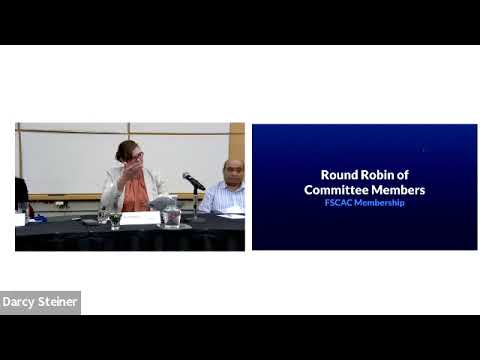 Play the video: FSCAC May 25 2023 Open Meeting Recording
On May 25, 2023, the Federal Secure Cloud Advisory Committee (FSCAC) held its first meeting, in Washington, D.C., and online. The FSCAC is the advisory committee that the FedRAMP Authorization Act requires. FedRAMP is the Federal Risk and Authorization Management Program. The committee gives advice and recommendations to the General Services Administration (GSA), the FedRAMP Board, and agencies. It does not set FedRAMP's rules.
This recording, posted on June 7, 2023, covers the morning: the opening, remarks from GSA leaders, the charter, and a briefing from FedRAMP's acting director with questions from members. It stops at the lunch break. In the afternoon, the Office of Management and Budget (OMB) briefed the committee on a future FedRAMP memo, as GSA's minutes record. GSA posted a second recording of the whole day on July 18, 2023.
The meeting came before the FedRAMP Consolidated Rules for 2026. In 2023, FedRAMP's approval was called a "FedRAMP authorization." Under the Consolidated Rules, the term is "FedRAMP Certification," and a certified service is "FedRAMP Certified," as FedRAMP's What's Changing in 2026 page explains. Quotations in this post are words from the video, checked against its captions. The post names speakers by role.
In short:
- What FedRAMP said. The acting director reported 308 authorized cloud services, 92 in process, and 22 FedRAMP Ready. The briefing named the time and cost of authorization and barriers for small businesses as weaknesses.
- What members raised. Members asked how FedRAMP measures its timelines, why the review queue was long, whether the program had enough resources, and how agencies can get access to package documents for reuse.
- What it means for agencies and cloud providers. Nothing changed that day. The meeting gave the committee background. It voted on its first priorities at its July 20, 2023, meeting, as GSA's minutes for that meeting record.
Source: FedRAMP's acting director at the FSCAC meeting of May 25, 2023. JAB is the Joint Authorization Board. GSA's minutes give 307 authorized cloud service providers.
Show the numbers
| Cloud service offerings | |
|---|---|
| Authorized cloud services | 308 |
| Authorized through agencies | 256 |
| Authorized through the JAB | 52 |
| In process | 92 |
| FedRAMP Ready | 22 |
What did FedRAMP tell the committee about the program's size?
The acting director said the program's mission is to promote the adoption of secure cloud services through a standard approach to security and risk assessment. The value, the acting director said, is that a security assessment is done once and then reused by other agencies.
In 2023 there were two paths. In the agency path, an agency assessed a provider, accepted the risk, and issued an authorization to operate (ATO). The FedRAMP Program Management Office (PMO) then reviewed the package before listing it. In the other path, the Joint Authorization Board (JAB) issued a provisional authorization. The acting director said the JAB does not accept risk for the government; it states that the service meets a standard that lets agencies reuse it. The JAB was made up of the chief information officers of GSA, the Department of Homeland Security (DHS), and the Department of Defense (DoD).
The briefing gave these figures:
- 308 authorized cloud services, about 80% at the moderate impact level. The JAB had authorized 52 and agencies 256.
- More than 5,600 reuses, and 92 cloud service offerings in process.
- More than 200 agencies in the program, and about 138 agency liaisons across 80 agencies.
- More than 400 cloud services in the marketplace and more than 40 recognized third-party assessors.
A member asked whether the counts were providers or offerings. The acting director said they were cloud service offerings. The acting director also said the PMO had five full-time federal staff.
The GSA Commissioner of the Federal Acquisition Service said the average authorization took 12 to 24 months when the program started and took about seven to eight months then. JAB authorizations took about four to five months.
Why is FedRAMP hard for small businesses?
The briefing's analysis of strengths, weaknesses, opportunities, and threats listed the time and cost of authorization and the barriers to entry for small businesses as weaknesses. It also listed program policy that is intentionally broad and open to different interpretation. The acting director said the policies work like guardrails, so different technologies and service models can fit between them.
FedRAMP Ready, the acting director said, lets a provider with no agency partner show its commitment on the marketplace:
"We do not do business development for cloud providers. We enable them to get a FedRAMP Ready and come on the marketplace so they can do their business development." — FedRAMP's acting director
The Commissioner, who had taken a product through FedRAMP at a cloud company, described the cost to a company:
"It's not cheap, it's not free." — GSA's Commissioner of the Federal Acquisition Service
The acting director said the challenge is convincing small businesses to invest with no guaranteed return, because agencies may not buy what reaches the marketplace. Later, a member from the Small Business Administration asked for data on small business costs and failure rates. The acting director said FedRAMP does not collect cost data from providers.
Why were reviews slow, and what did FedRAMP plan to automate?
A member said the committee had been told that, as of the beginning of May, the PMO's review queue, after an agency issues its ATO, was five to six months. The acting director said FedRAMP had contracted for more reviewers through the American Rescue Plan. The year before, added reviewers had cut the queue from 13 weeks to zero.
The acting director said JAB reviewers spent about 80% of their time on continuous monitoring and 20% on new systems, by a rough estimate. FedRAMP planned to rely on the Open Security Controls Assessment Language (OSCAL), a machine-readable format it built with the National Institute of Standards and Technology (NIST). It planned to buy a governance, risk, and compliance (GRC) tool by the end of fiscal year (FY) 2023 and to have a robust capability by the end of FY 2024, when its American Rescue Plan funding expired.
A member from the Defense Information Systems Agency (DISA), whose team was one of the JAB's technical representatives, said every 20 cloud service providers added cost about $1.3 million in continuous monitoring. On the program's resources, the member said:
"On resources, are they sufficient? The answer is no." — FSCAC member from the Defense Information Systems Agency
The same member asked for easier access to package documents. The member also asked for a clear record of which security controls a provider can rely on from the cloud service beneath it. The acting director said OMB MAX, the repository then in use, was being retired, and that FedRAMP was looking for a repository at the high impact level.
The acting director said the Revision 5 baselines would come out shortly. FedRAMP announced on May 29, 2023, that the JAB had approved them.
Who else accepts FedRAMP?
A member from NIST asked who else relies on FedRAMP. The acting director said DoD requires a defense contractor that uses an external cloud service to meet a level equal to FedRAMP Moderate. Answering another member, the acting director named Arizona and Texas as states with similar programs and said StateRAMP, a nonprofit, does the same across states. The acting director also said FedRAMP had talked with several foreign governments.
In opening remarks, the GSA Administrator described FedRAMP's role:
"It's the gate that literally every single thing, every cloud-based tool has to go through if it's going to interact with the public." — GSA Administrator
Sources
- FedXchange tracker: FSCAC May 25 2023 Open Meeting Recording (morning)
- YouTube: FSCAC May 25 2023 Open Meeting Recording
- GSA: FSCAC May 25, 2023, meeting agenda and minutes
- GSA: FSCAC July 20, 2023, meeting minutes
- Federal Register: FSCAC notification of upcoming meeting, May 15, 2023 (2023-10232)
- GSA: Federal Secure Cloud Advisory Committee
- FedXchange tracker: FedRAMP Authorization Act (Public Law 117-263, section 5921)
- FedRAMP: Rev. 5 baselines have been approved and released
- FedXchange tracker: FedRAMP Consolidated Rules for 2026
- FedRAMP: What's Changing in 2026
- FedXchange tracker: FSCAC May 25 2023 Open Meeting Recording (whole day)
Get new posts and federal governance by email
A weekly email on Fridays, an alert on the day the watch finds something new, or both. Free.