FSCAC, November 9, 2023: the committee reworks its first memo to the GSA Administrator and puts off the final vote
On November 9, 2023, the Federal Secure Cloud Advisory Committee reviewed its draft memo on authorization, continuous monitoring, and automation. Members asked for broader recommendations and more time, so the vote moved to a later meeting. The advice is not a rule.
By FedXchange ·
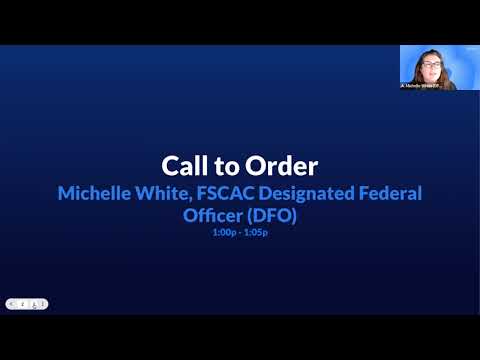 Play the video: Federal Secure Cloud Advisory Committee (FSCAC) November 9 2023 Meeting Recording
On November 9, 2023, the Federal Secure Cloud Advisory Committee (FSCAC) met online by Zoom. The FSCAC is the advisory committee that the FedRAMP Authorization Act requires. It gives advice and recommendations to the Administrator of the General Services Administration (GSA), the FedRAMP Board, and agencies. FedRAMP is the Federal Risk and Authorization Management Program. The committee's recommendations are advice. They do not change FedRAMP's rules.
The Federal Register notice said this meeting would be a working session to finalize the committee's deliverable to the GSA Administrator, with its recommendations for each priority initiative. The three priorities were the authorization path for cloud providers (the notice called them Cloud Solution Providers, or CSPs), continuous monitoring (ConMon), and automation.
The meeting came before the FedRAMP Consolidated Rules for 2026. In 2023, FedRAMP's approval was called a "FedRAMP authorization," and members spoke of the Joint Authorization Board (JAB) and agency authorizations. The current terms are "FedRAMP Certification" and "FedRAMP Certified." FedRAMP's What's Changing in 2026 page explains the change.
Quotations in this post are words from the meeting recording, checked against its captions. The post names speakers by their role.
In short:
- What the committee decided. It did not vote. A member asked for time to have their agency review the final text. GSA's minutes say the vote would take place at a future meeting.
- What members changed. Members asked for fewer, higher-level recommendations. They moved items that only the Office of Management and Budget (OMB) can decide to a "parking lot," and moved Open Security Controls Assessment Language (OSCAL) items to the automation section.
- What members raised. Several members said the goals should put the security of cloud offerings first, not cost or compliance. A small business member asked the committee to study what new tool requirements cost small companies.
- What it means for agencies and cloud providers. Nothing changed yet. Members had until November 30 to send their edits. The committee approved its top recommendations on January 18, 2024.
Sources: the November 9, 2023, meeting video, the Federal Register notice, GSA's minutes for November 9, 2023, and January 18, 2024, and the FSCAC's recommendations memo on 2023 priorities. The recommendations are advice, not FedRAMP rules.
Read the steps as text
- July 2023. The committee approved three priority areas: the CSP authorization path, continuous monitoring, and automation.
- October 19 to November 2, 2023. Weekly working sessions built a long list of recommendations in each area.
- November 9, 2023. Members reviewed the draft memo, asked for higher-level recommendations, and put off the vote.
- November 30, 2023. Deadline for members to send their individual edits to the revised draft.
- January 18, 2024. Members approved the top three recommendations in each area by unanimous votes.
Why did the committee not vote on its memo?
The Designated Federal Officer (DFO) opened the meeting and confirmed a quorum. The committee chair then led the review of the draft memo. The plan was to edit each section together, have members vote on their top three or five recommendations, and then approve the memo.
Early on, a member asked to delay the final vote because their agency had to review the text first. The DFO said the committee could change the agenda and hold the vote at a future meeting. A small business member also supported not voting that day.
Later, members found that the draft listed many detailed recommendations, lettered A through J and beyond in the authorization section alone. One member asked how such detailed items would reach FedRAMP if the memo kept only three to five. The chair answered:
"We're not generating a 12 month comprehensive roadmap for the FedRAMP team. FedRAMP has a roadmap and many of these things are on the roadmap." — Committee chair
Two members said the memo should move up a level. One said the program office probably has good ideas about what it can do and how to do it in the time it has. The committee chose to regroup the items into higher-level recommendations.
Members could not all open the shared document, so the DFO said GSA would send the revised draft to each member after the meeting. The DFO set a deadline of November 30 for individual feedback. The support team would combine the edits and send them out before the next meeting.
Which items did members say belong to OMB?
During the authorization section, a member suggested adding a consideration: confirm exactly what requires FedRAMP authorization (now FedRAMP Certification). Another person said that OMB has that authority through its FedRAMP memo, and that GSA can make recommendations to OMB. The same person noted that a new draft FedRAMP memo was out.
That draft was OMB's "Modernizing the Federal Risk and Authorization Management Program," which OMB released for comment on October 27, 2023. A Federal Register notice later extended the comment period from November 27 to December 22, 2023. OMB issued the final version as M-24-15 on July 25, 2024.
A member then asked for a parking lot for items that change what FedRAMP covers or which controls it requires. Those items would go to OMB instead of the GSA Administrator. The chair proposed a line. Reusing control assessments from one FedRAMP review in another would stay in the memo. Control inheritance from frameworks outside FedRAMP would go to the OMB list. One member noted that using other frameworks' assessment data is already allowed, and that only accepting those frameworks in place of FedRAMP is OMB's decision.
At its November 16, 2023, meeting, the committee approved a separate letter on the draft OMB memo, by a majority roll call vote, for delivery to the GSA Administrator by November 20.
What did members want the goals to say?
A member from the Cybersecurity and Infrastructure Security Agency (CISA) asked that security lead each problem statement:
"We should not forget that FSCAC stands for federal secure cloud. So security is our primary goal and that needs to be captured in the problem statements." — FSCAC member from CISA
Another member answered that "the authorization process doesn't impact the security of the offerings." That member said the process informs risk decisions. The chair asked to table that point. Later, members agreed that improving the security of cloud offerings should be the top goal.
In the continuous monitoring section, members said "ConMon" needed a clear definition, since it can mean monthly reporting or the annual assessment. One consideration said 80 cents of every dollar goes to keeping existing authorizations and 20 cents to new ones. A member asked how sure the committee was of that figure. Another member said it matched their own budget and resourcing experience.
The same CISA member also asked to change an automation item. It had said to set guidance for bringing ConMon data into tools such as Continuous Diagnostics and Mitigation (CDM). The member wanted it to say "accelerate" that work instead. Another member suggested sharing OSCAL data across agencies, not only ConMon data.
What did the small business member ask for?
A member who represents small businesses said the recommendations made sense but could cost small companies more:
"There are some potentially more negative impacts on small businesses when we make requirements with, for example, the need to investment in tools or however that goes." — FSCAC member who represents small businesses
The member asked the committee to come back to the second-order effects on small companies after the memo. The chair said they hoped each section's considerations would include the impact on small businesses.
What came next for the committee?
A member asked whether the committee would pick new topics in 2024. The DFO said one early topic would come from the artificial intelligence (AI) executive order:
"we have been identified in the artificial intelligence executive order as supporting the GSA administrator in looking at a process that FedRAMP is currently developing." — Designated Federal Officer
Executive Order 14110, signed October 30, 2023, gave GSA 90 days to issue a framework for prioritizing emerging technologies in the FedRAMP process, in consultation with the FSCAC.
In public comment, speakers asked the committee to reduce the friction of finding an agency sponsor, lower costs for providers, test systems more intensely, and use automation to show agencies a system's security posture. The committee approved its top recommendations on January 18, 2024, as GSA's January minutes record. GSA later posted the committee's recommendations memo on 2023 priorities with its March 28, 2024, meeting materials.
Sources
- FedXchange tracker: Federal Secure Cloud Advisory Committee (FSCAC) November 9 2023 Meeting Recording
- YouTube: Federal Secure Cloud Advisory Committee (FSCAC) November 9 2023 Meeting Recording
- GSA: FSCAC November 9, 2023, meeting agenda and minutes
- Federal Register: FSCAC notification of upcoming meetings, September 25, 2023 (2023-20661)
- GSA: FSCAC November 16, 2023, meeting agenda and minutes
- GSA: FSCAC January 18, 2024, meeting agenda and minutes
- GSA: FSCAC recommendations memo on 2023 priorities
- OMB: Draft memorandum for modernizing FedRAMP, October 27, 2023
- Federal Register: Extension of the comment period on the draft FedRAMP memo, November 20, 2023 (2023-25594)
- FedXchange tracker: OMB M-24-15, Modernizing FedRAMP
- Federal Register: Executive Order 14110 (2023-24283)
- GSA: Federal Secure Cloud Advisory Committee meetings
- GSA: Federal Secure Cloud Advisory Committee
- FedXchange tracker: FedRAMP Authorization Act (Public Law 117-263, section 5921)
- FedXchange tracker: FedRAMP Consolidated Rules for 2026
- FedRAMP: What's Changing in 2026
Get new posts and federal governance by email
A weekly email on Fridays, an alert on the day the watch finds something new, or both. Free.