FSCAC, September 2024: the committee hears OMB on its new FedRAMP memo, and industry and agencies on what slows them down
On September 12, 2024, the Federal Secure Cloud Advisory Committee heard the Office of Management and Budget and the new FedRAMP Director on memo M-24-15, then panels of industry and agency staff. It took no vote. The input informed its 2024 advice to the GSA Administrator.
By FedXchange ·
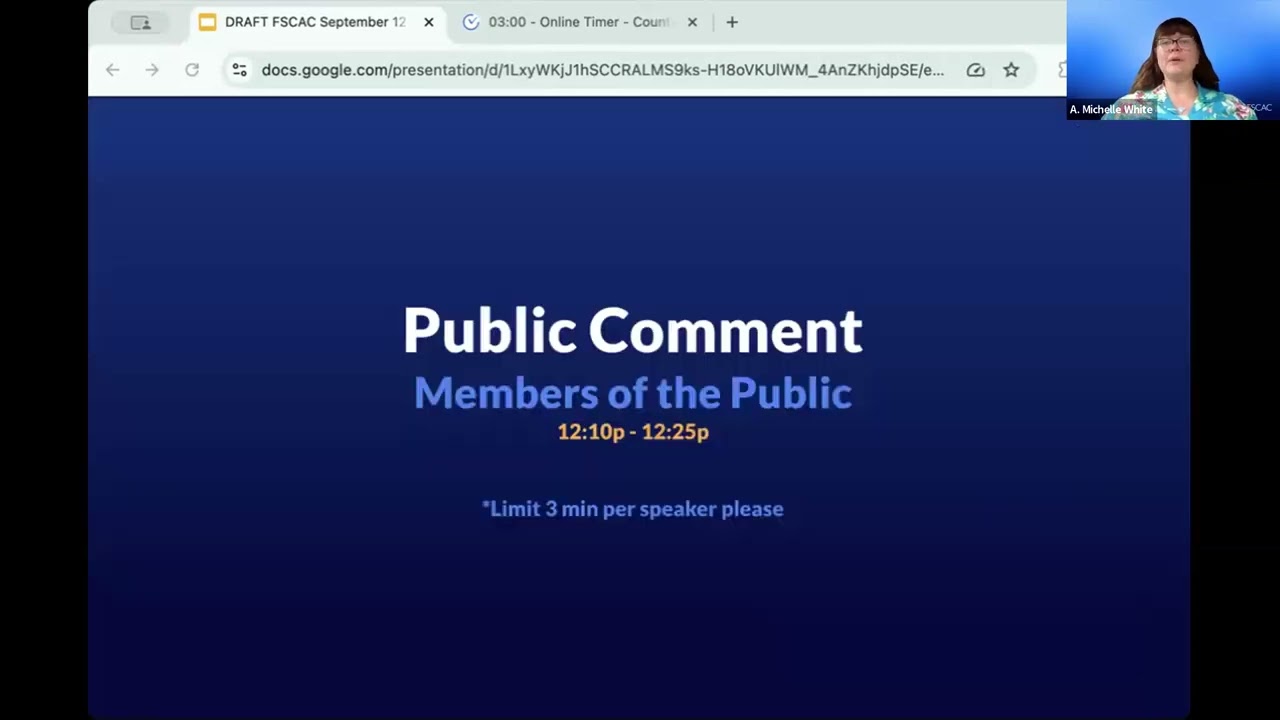 Play the video: Federal Secure Cloud Advisory Committee (FSCAC) September 12, 2024 Open Meeting
On September 12, 2024, the Federal Secure Cloud Advisory Committee (FSCAC) held a virtual public meeting. The FSCAC is the advisory committee that the FedRAMP Authorization Act requires. It gives advice to the Administrator of the General Services Administration (GSA), the FedRAMP Board, and agencies. FedRAMP is the Federal Risk and Authorization Management Program. The committee's recommendations are advice. They do not change FedRAMP's rules.
The Federal Register notice said the meeting would give members "additional information pertinent to their new initiatives." It had two parts: a briefing on the Office of Management and Budget (OMB) memo on FedRAMP, and panels of industry and agency staff.
The meeting came before the FedRAMP Consolidated Rules for 2026. In 2024, the program and the memo called FedRAMP's approval a "FedRAMP authorization." The current terms are "FedRAMP Certification" and "FedRAMP Certified." FedRAMP's What's Changing in 2026 page says the change avoids confusing FedRAMP's approval with an agency's authority to operate (ATO). Quotations in this post are words from the meeting video, checked against its captions.
In short:
- What the committee heard. OMB officials explained M-24-15, Modernizing the Federal Risk and Authorization Management Program, issued July 25, 2024. The new FedRAMP Director, then in the job 13 days, described how FedRAMP would carry it out. Panels of industry and agency staff described their experience.
- What members raised. A member from the Securities and Exchange Commission (SEC) said the memo's narrow out-of-scope list leaves small businesses and small agencies without a path. Other members asked how red team assessments would work and whether agency heads can rely on FedRAMP packages.
- What it decided. Nothing. GSA's minutes record no vote and no action items. The chair said the meeting ended the committee's "discovery phase."
- What it could mean for agencies and cloud providers. The meeting informed the committee's draft 2024 advice to the GSA Administrator on barriers to entry and faster approvals. Members began drafting that advice on October 3, 2024.
Sources: the September 12, 2024, meeting video and GSA's agenda and minutes. The committee's advice goes to the GSA Administrator and is not a FedRAMP rule.
Read the steps as text
- Public comment. A cloud provider asked for tighter enforcement, a small provider criticized the sponsor model, and an agency official reported a shortage of assessors.
- OMB briefing. OMB officials explained memo M-24-15: new approval paths, the presumption of adequacy, and machine-readable packages.
- FedRAMP response. The FedRAMP Director described a new program path, more federal staff, and a pilot for significant change requests.
- Industry panel. Two cloud providers and a research group described long reviews, shifting guidance, and assessor shortages.
- Agency panel. Treasury, the Pension Benefit Guaranty Corporation, and Education described portal gaps and uneven continuous monitoring.
- Takeaways. The chair listed issues for the committee's draft advice. The committee took no vote.
What did OMB's memo change for agencies and cloud providers?
An official from OMB's Office of the Federal Chief Information Officer presented the memo. The official called it "M-24-10" in the meeting, and GSA's minutes repeat that label, but the memo is M-24-15. The memo replaced OMB's FedRAMP memo of December 8, 2011. The official named its main parts and answered questions on others. The memo's text confirms each one:
- Authorization paths. Agency authorizations by one agency or by several agencies together, and a new program authorization signed by the FedRAMP Director. The memo says a program authorization lets agencies use a service "for which an agency sponsor has not been identified." The FedRAMP Board may approve other paths.
- Presumption of adequacy. Agencies must presume a FedRAMP package is adequate for an ATO at or below its impact level. The memo says this does not override agency heads' duties under the Federal Information Security Modernization Act of 2014 (FISMA).
- Machine-readable packages. FedRAMP is to receive packages as data through Open Security Controls Assessment Language (OSCAL). Within 24 months of the memo, agencies must ensure their governance, risk, and compliance (GRC) tools can take in and produce OSCAL files. The official said "I believe, two years."
- Red teams and special reviews. Assessments "may also involve intensive, expert-led 'red team' assessments at any point during or following the authorization process." The FedRAMP Board must approve any special review of an existing approval.
The FedRAMP Director said FedRAMP was "100% leaning into" the program path. The Director said FedRAMP had added federal staff and would soon notify the first partners chosen for an agile delivery pilot for significant change requests. The Director also cautioned:
"just because OMB puts out a memo saying that we need to do something, the act of actually turning our ship is complex and it takes a while." — FedRAMP Director
Why did a member say the memo puts small businesses at a disadvantage?
The SEC member said the old memo let an agency tell OMB it needed a cloud tool that had not been through FedRAMP. The new memo replaces that with a short list of out-of-scope categories.
"I was extremely disappointed that OMB ignored the advice of this committee on the exception process." — FSCAC member from the Securities and Exchange Commission
The member said many small businesses cannot afford FedRAMP approval, and a small agency cannot pay to sponsor one. The member asked OMB to reconsider. The OMB official said the scope follows the law's intent. The memo lets the FedRAMP Board, with the Federal Chief Information Officer's agreement, name more out-of-scope categories. The memo also lets agencies pilot a new service under a temporary authorization "not to exceed twelve months." The member called the category approach anti-competitive.
A member from HackerOne said a quick search found 8 of 494 Marketplace entries at the low impact level. A member from the National Institute of Standards and Technology (NIST) said red teams raise questions about disclosure and who owns what a red team finds. Another member asked for legal clarity that agency heads may rely on the presumption of adequacy.
What did cloud providers say slows them down?
A provider from Global Telehealth Services said its path started when the Department of Veterans Affairs asked for its service early in the COVID-19 pandemic. It reached approval in July 2024. Along the way, the FedRAMP Program Management Office (PMO) said too much time had passed since the assessment and required a new full one. The provider said guidance changed between its three review meetings.
"I don't have a problem with lots of findings, as long as I'm given the time to fix them." — Industry panelist from Global Telehealth Services
A panelist from Mark43, approved at the High level in May 2024, said the PMO found many problems its assessor had not. A second review then raised new findings. The panelist said one large agency asked for a separate Moderate environment, even though the High one covered Moderate needs.
The head of the Advanced Technology Academic Research Center (ATARC) said the work of third-party assessment organizations (3PAOs) has gathered in a few firms. ATARC asked for data on what approval costs companies. One panelist said few 3PAOs have experience at the High level.
What did agencies say about FedRAMP's tools?
A Treasury official praised the PMO but said agencies struggle to tell who is responsible for which control when several providers host one system. Continuous monitoring reports vary from provider to provider.
"Unfortunately, it is often out of date, missing necessary information for our security officers and compliance teams to perform their work." — Agency panelist from the Pension Benefit Guaranty Corporation
That panelist was describing the FedRAMP portal. One provider's monitoring reports were missing for over eight months. The panelist also described manual access forms and a GRC tool that cannot take in cloud packages. A Department of Education official said the agency works with about 60 cloud service providers. PMO reviews that once took four to six weeks grew to four to six months. The official said providers wait on FedRAMP guidance before following directives from the Cybersecurity and Infrastructure Security Agency (CISA).
The chair's takeaways included FedRAMP staffing, inconsistent guidance, limited 3PAO capacity, portal problems, and collaborative continuous monitoring. The FedRAMP Director said the public can send questions to info@fedramp.gov.
Sources
- FedXchange tracker: Federal Secure Cloud Advisory Committee (FSCAC) September 12, 2024 Open Meeting
- YouTube: Federal Secure Cloud Advisory Committee (FSCAC) September 12, 2024 Open Meeting
- GSA: FSCAC September 12, 2024, public meeting agenda and minutes
- GSA: Federal Secure Cloud Advisory Committee meetings
- GSA: Federal Secure Cloud Advisory Committee
- Federal Register: FSCAC notification of upcoming meetings, August 23, 2024 (2024-18937)
- FedXchange tracker: OMB M-24-15, Modernizing the Federal Risk and Authorization Management Program
- OMB: M-24-15 (PDF)
- FedXchange tracker: FedRAMP Authorization Act (Public Law 117-263, section 5921)
- FedXchange tracker: FedRAMP Consolidated Rules for 2026
- FedRAMP: What's Changing in 2026
- FedXchange: FSCAC, October 2024: the committee drafts recommendations
Get new posts and federal governance by email
A weekly email on Fridays, an alert on the day the watch finds something new, or both. Free.